The Pygmalion Effect (Why Expecting A Good Day Gets You One)
September 7, 2026 · Notes from Easy
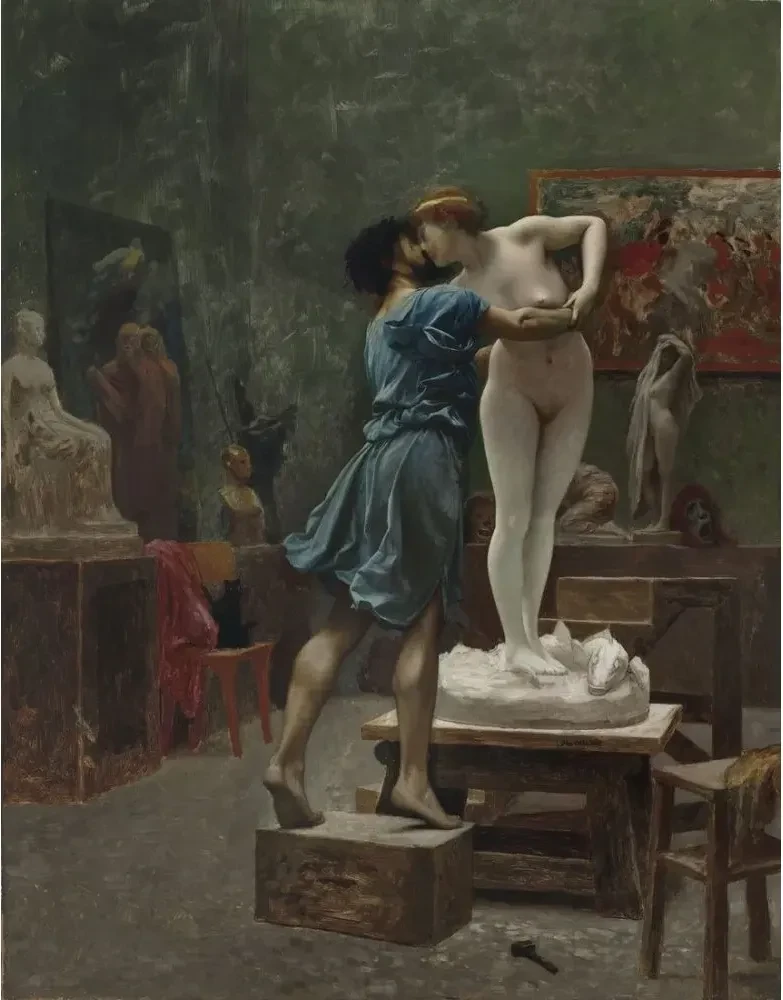
Pygmalion and Galatea, Jean-Léon Gérôme (1890)
A Sculptor, A Statue, And The Kids Who Bloomed
Old Greek story. A sculptor named Pygmalion carves a statue so perfect he falls head over heels for it — and believes in it so completely that the goddess Venus takes pity on him and makes it real. Now, I can't promise you a goddess. But a Harvard researcher named Dr. Robert Rosenthal borrowed that sculptor's name for something that might matter more to your Monday than any myth ever will.
Here's what Rosenthal did. Teachers were told a handful of their students had tested as late bloomers — kids on the verge of taking off. Sounded official. It wasn't. Those names were pulled out of a hat, plain ordinary kids, no different from the ones sitting next to them. And by the end of the year? They had bloomed. Measurably. The only thing anybody changed was what the teacher expected of them. That finding's been run again and again in the years since — classrooms, and workplaces too (Harvard Business Review published the business version). Expect more from somebody, and without even meaning to, you treat them like more. And they become more. Expect less... well, that works just as reliably, and ain't that a sobering thought?
I watched it happen with my own eyes, years back. A sales manager named Robert flat-out banned negative talk on his team. Not "toned it down" — banned it. No "this territory's dead," no "nobody's buying this time of year." Folks thought he was a little nuts. His team didn't edge out the other teams that year. They lapped them — outsold them by 1,500%. I wrote the whole story up a few years ago in my Pygmalion Effect piece on Medium, if you want the long version with all the trimmings.
Your Own Head Runs The Same Experiment On You
Now here's the part that ought to stop you mid-coffee: in your own life, the teacher and the student are the same person. You.
Every morning, before your feet hit the floor, you tell yourself what kind of day this is going to be. "Today's gonna be a mess." "I'll never get through all this." Or — "I've got this one." And then, like clockwork, you spend the next sixteen hours proving yourself right. Henry Ford nailed it a hundred years ago: "Whether you think you can, or you think you can't — you're right." So let me ask you the only question that matters: if you're going to be right either way, why on earth wouldn't you be right about something good?
21,466 Expectations Of A Good Day
Which brings me to a number I keep on the front page of this site. As I write this, the counter reads 21,466 daily people impacts. And I finally have the right name for what that number really counts.
Every one of those check-ins is somebody sitting down with their list and expecting — deciding, really — that today can be handled. Writing the list IS the expecting. It's you telling yourself, in ink, "here's what a good day looks like, and I intend to have one." Then the checkmarks start landing, and something sneaky happens: you're not just expecting anymore. You're collecting evidence. Proof, stacking up all day, that you're exactly the kind of person who does what they say. Seal it off with your Day Score, do it again tomorrow, and pretty soon your streak has built a case your own brain can't argue with.
That's why I say the checklist is a little Pygmalion machine. First it manufactures the expectation. Then it manufactures the receipts. Rosenthal needed a whole school year to prove this works. You can watch it work by suppertime.
Be Right About Something Good
There's a quote that rotates through the app — one of mine, and after twenty-some years of chewing on this idea, it's the whole philosophy in two sentences: "We live in the reality we create daily. Why not make yours wonderful?"
So tomorrow morning, run the experiment on yourself — the good version. Expect a fine day. Write down what one looks like. Then go prove yourself right, one checkmark at a time. The list is free, it always will be, and 21,466 check-ins say the expecting works.
Take it Easy!

Cheers,
Andrew Easy Anderson
Free forever!
Built by Andrew Easy Anderson